Thailand does not let foreigners own land, but it does let them own a condominium outright, in their own name, with a title deed from the Land Office. For anyone who has dreamed of a home on Koh Samui, that single rule is the reason condos have become the simplest and safest way in.
This guide explains how foreign freehold works, what it costs, what the island’s rental market looks like today, and why a condo a short walk from Lamai Beach can work as a home, a holiday base and an investment at the same time.
What “foreign freehold” means in Thailand
Under Section 19 of Thailand’s Condominium Act, foreigners may own condominium units as long as foreign ownership in the building does not exceed 49% of the total floor area of the units. Inside that quota, the unit is registered on a Chanote title deed in your own name. You can sell it, lease it out, mortgage it or leave it to your heirs.
That is a real difference from the alternatives. Villas and land are usually bought by foreigners through 30-year leases or company structures, which add cost, paperwork and long-term uncertainty. A freehold condo is ownership in the plain sense of the word.
How to buy correctly
- Check the quota. Ask the developer to confirm the unit is sold within the 49% foreign quota. At Coral, every unit in the price list is marked as foreign freehold, Thai quota or on request.
- Bring the money in from abroad. The purchase price must be transferred into Thailand in a foreign currency, such as EUR, USD or GBP. The receiving Thai bank issues a Foreign Exchange Transaction form, which the Land Office needs to register your title.
- Match the names. The name on the transfer, the bank form and the title deed must be the same, and the transfer should state that it is for the purchase of a condominium unit.
- Use an independent lawyer. A Thai lawyer checks the contract, the developer’s licences and the quota before you pay the main instalments.
- Transfer at the Land Office. On completion, ownership is registered and the title deed is issued in your name.
What it costs, beyond the price
| Cost | Typical rate | At Coral Condo Samui |
|---|---|---|
| Transfer fee | 2% of the official appraised value | Paid by the buyer |
| Specific business tax | 3.3% of the higher of price or appraised value | Paid by the seller |
| Maintenance fee | Set per project | THB 60 per m² per month |
| Sinking fund | One-time, set per project | THB 600 per m² |
| Water and electricity meters | Set per project | THB 10,000 |
For a 68 m² one-bedroom residence, the maintenance fee works out at about THB 4,100 a month, which covers the pool, gardens, security and shared areas.
Why Koh Samui, and why now
Samui is a small island with one airport and a limited supply of land, and demand has been growing faster than supply:
- 2.78 million air passenger arrivals at Samui airport in 2024, up 21% on the year before and above pre-pandemic 2019 levels.
- +9% more arrivals again in January to April 2025.
- +12% occupancy and +9% average room rates in the island’s hotels in 2024.
- About 1% a year growth in hotel room supply over the past five years.
- 56% of visitors in 2024 came from Europe, led by Germany, the UK and France.
More visitors chasing a slowly growing number of rooms is the basic reason rental demand on Samui has stayed strong.
Projected returns: what the numbers say
We prefer to show realistic ranges rather than a single promised figure. Published 2026 market data for Koh Samui gives the following:
| Rental strategy | Gross yield | Net yield (after costs) |
|---|---|---|
| Long-term rental (6 to 12 months) | 5% to 8% | About 1.5 to 2.5 points lower |
| Short-stay holiday rental | 7.5% to 12% in prime tourist areas | Lower again, after management of 20% to 30% of revenue |
A worked example. A one-bedroom residence at THB 6,572,160 earning a 6% gross yield would bring in about THB 394,000 a year. After maintenance, management, utilities and a vacancy allowance, a realistic net figure is closer to 4% to 4.5%, or roughly THB 260,000 to 295,000 a year.
Capital growth comes on top of rental income. Local market reports forecast price growth of around 5% to 7% a year for the island as a whole in 2026, with more for prime and sea-view locations. These are forecasts, not guarantees, and returns depend on the unit, the season and how it is managed.
Why a condo rather than a villa
- Lower entry price. Coral residences start at THB 6.57 million. Villas in Lamai typically range from about THB 8 million to 30 million.
- Freehold title in your own name, instead of a lease or a company.
- Lock and leave. Security, the pool and the gardens are looked after while you are away.
- Lower running costs. One maintenance fee instead of your own pool staff, gardener and repairs.
- Easier to rent and resell. A furnished one- or two-bedroom home near the beach suits the largest group of renters and buyers.
Living steps from the beach
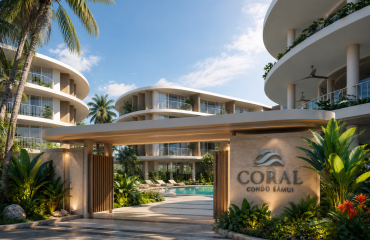
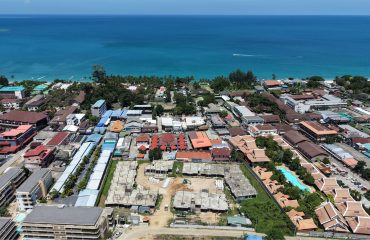
Lamai is Samui’s relaxed second town: a long sandy beach, a night market, restaurants, cafés and daily shopping, all within walking distance. Coral Condo Samui sits on Lamai Soi 2, about 500 m from the beach, five minutes from schools and shopping malls and fifteen minutes from hospital.
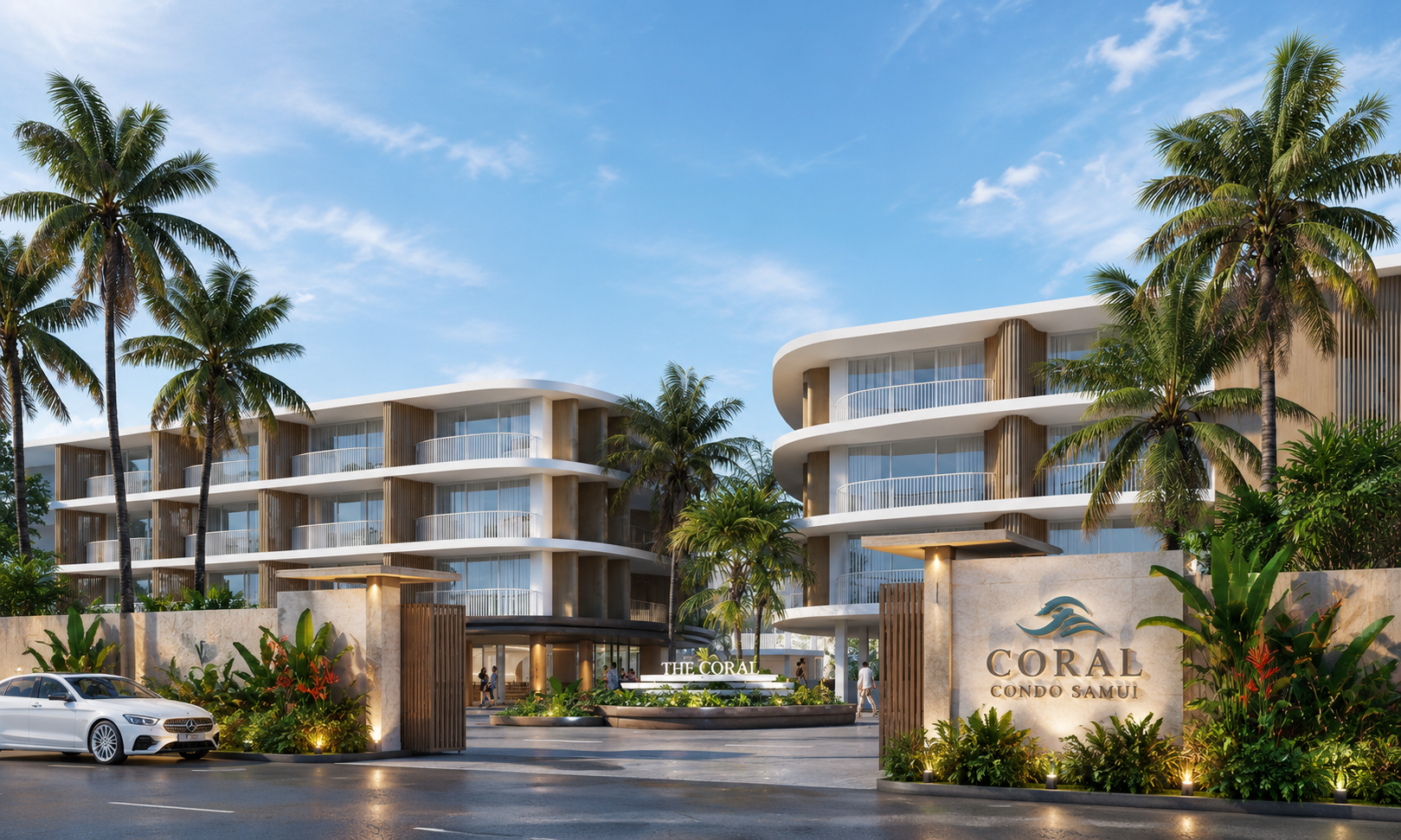
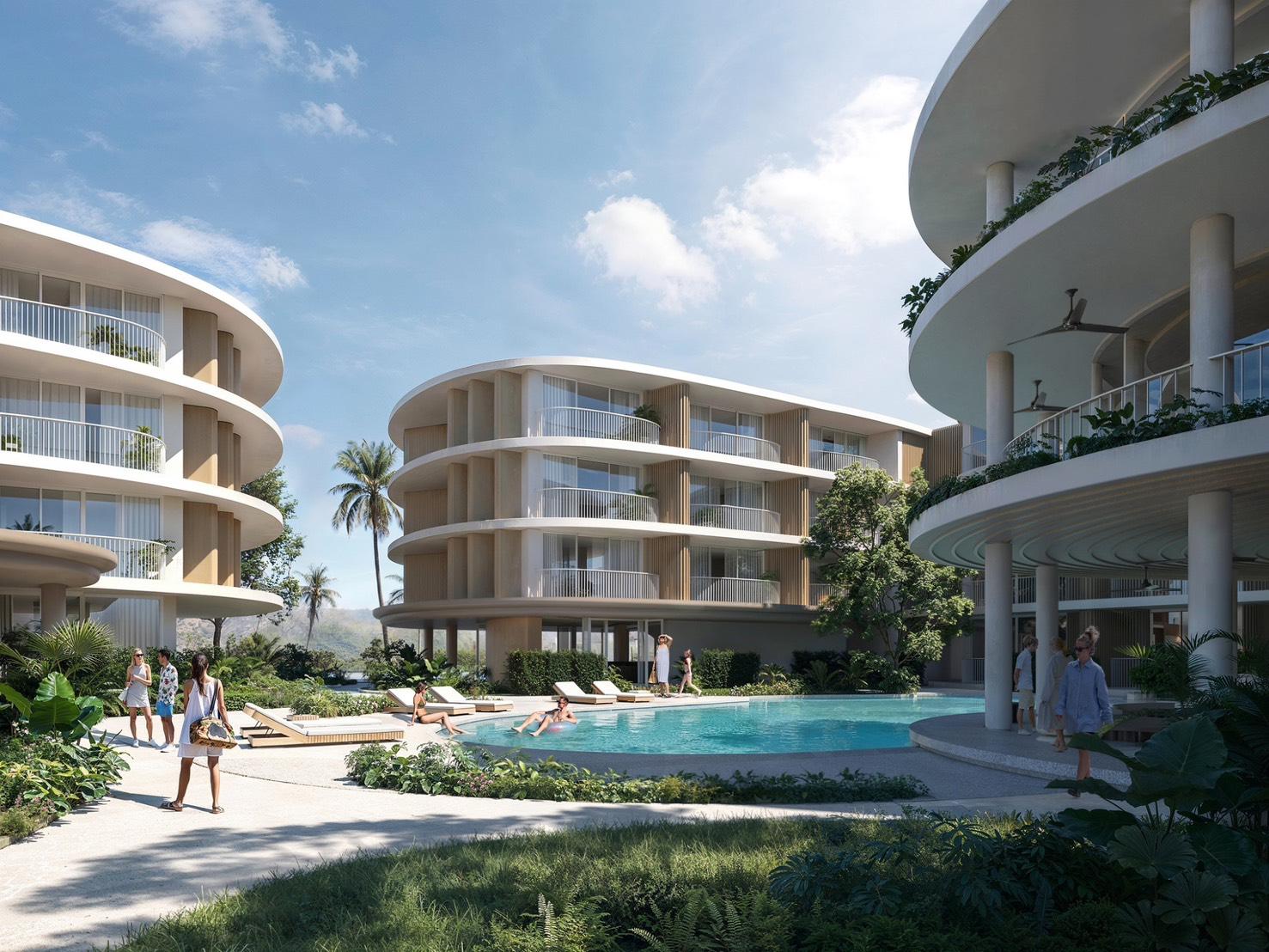
The project is a low-rise community of 91 residences in four buildings, with a lagoon-style pool, a sunken pavilion, fitness and sauna areas, 24-hour security and EV charging. Homes range from 68 m² one-bedroom residences to a single 158 m² three-bedroom, all sold fully furnished. A THB 50,000 reservation holds a unit, followed by 30% at contract, 40% in instalments during construction and 30% at transfer.
Next steps
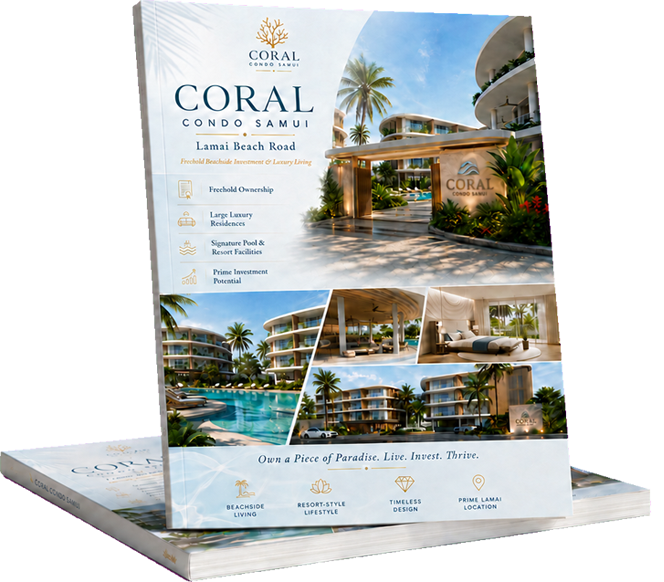
If you would like to check which units are still available as foreign freehold, see the price list, download the brochure, or message our sales team on WhatsApp at +66 637 387 455.
This article is general information, not legal, tax or financial advice. Laws, fees and market figures change; please confirm the details for your purchase with an independent Thai lawyer and tax adviser. Market figures: C9 Hotelworks Samui Hotel and Tourism Market Update (June 2025); Thailand Condo Shop rental yield guide (April 2026); Samui Property Group market report (2026); Condominium Act B.E. 2522, Section 19.